
Ripley Criminal History Checks
Ripley’s small scale makes precise routing vital. An event in the village may be documented by a sheriff’s deputy or an ISP trooper. A custodial partner may hold the person. The State’s Attorney decides whether to file charges, and the Circuit Clerk maintains any public case. CHIRP later provides only ISP-maintained conviction information.
Use five linked checks rather than one broad query.
- Review the weekly Sheriff’s Reports by date and US 24 location.
- Identify whether the sheriff or ISP created the incident record.
- Request the report from that agency, using focused FOIA language when needed.
- Search Brown County criminal and traffic categories, then call the clerk about ordinance indexing or certified copies.
- Use sheriff phone, VINELink, IDOC, or CHIRP only for the distinct custody or State question each answers.
Write down the system and date checked. No result in one source does not prove that no event or file exists.
Ripley’s Sheriff-First Record Route
The Brown County Sheriff is the only documented local general law-enforcement records contact. The office is at 200 Court Street, Room 1, Mt. Sterling, Illinois 62353. Call 217-773-2061 extension 1 or email sheriff@browncoil.org. No separate branded records division or vendor request portal is advertised.
Ask for a specific report, not “all criminal history.” Include requester contact, date range, event time and place, report or citation number, exact record sought, preferred format, and whether a certified copy is needed. The office may apply lawful redactions or direct an ISP-created report to ISP.
Ripley Incident Route
Brown County Sheriff
200 Court Street, Room 1
Mt.
Sterling, IL 62353
217-773-2061 ext. 1
sheriff@browncoil.org
No official Ripley counter hours or fees were found. Call before travel and request a fee estimate before authorizing costs.
For a crash, first determine whether the sheriff or ISP made the report. A county post can summarize partner activity without making the county the record custodian. Ask for the incident face sheet, arrest section, and closure notation tied to one event. Keep the routing reply, request date, and report identifier. Those details make a later court search more precise and explain why two agencies returned different slices of one occurrence.
Records at the Ripley Police Department
No official source verifies a Ripley police department records unit, form, portal, app, public phone line, or jail. That gap must remain explicit. Begin with the sheriff, and ask which agency employed the officer shown in the event record. If an ISP trooper made the stop, seek the report from ISP.
The weekly county archive can mix sheriff and partner-agency activity. Attribution matters. A road reference west of Ripley establishes patrol coverage, not which office holds every related document. The agency that wrote the narrative is usually the right report custodian.
US 24 west of Ripley is the specific official activity context found in the research. Use that location to narrow an archive review and help the sheriff distinguish the event from other calls on the same date. Do not convert the road reference into a village offense count or assume the village made the record. The named sheriff or ISP role controls the next request. If the post is unclear, ask which agency number belongs to the event before seeking a narrative, crash report, citation, or arrest record.
Juvenile content, victim information, private data, active-investigation facts, confidential sources, and security details can be withheld. Ask for the releasable remainder and the statutory ground for a denial.
If a Ripley Event Is Missing
No online entry can mean many things: the weekly archive selected other events, the case has not been filed, the matter sits in a traffic category, the name was entered differently, or the record is restricted. It cannot safely become “no record.”
Search the archive by date and US 24 location. Call the sheriff with the time, place, and likely agency. Ask for the report number and focused incident or arrest record. Search Brown County court records by case number and name in both criminal and traffic categories. If needed, phone the Circuit Clerk at 217-773-2713 extension 2 and ask how a village citation is indexed.
When ISP handled the event, use the ISP record categories and request route. A county office cannot certify a State police report it does not maintain.
Booking and Arrest Records in Ripley
A Ripley arrest begins a chain of records. The officer writes an arrest or incident report. A custodial facility creates intake, identification, charge, bond, and transfer data. The prosecutor may alter or reject alleged charges. The clerk creates a public docket only when a case is filed.
Brown County publishes no official web roster, separate jail address, visitation vendor, or facility contract. Call the sheriff for current housing, booking number, bond, release, and transfer. Ask for the receiving facility before sending money, mail, or a visit request. VINELink can supplement the phone call when participating data appears. IDOC is for State custody after commitment.
A weekly report may help identify the date and agency, but it is not a full arrest log and cannot prove guilt.
Ripley Incident, Citation, and Case
These terms mark different stages. An incident report describes an investigation and officer action. A citation records an alleged violation and directs a person into a process. A case begins when the prosecutor or authorized filer places a matter before the court. One event can create all three, but their text and legal effect may differ.
- Incident report
- Agency narrative that may include facts, roles, evidence, and action, subject to redaction.
- Citation
- Written allegation or notice, not a judgment of guilt.
- Court docket
- Chronological file of charges, appearances, motions, orders, and disposition.
- Disposition
- The recorded outcome for a count, such as dismissal, supervision, acquittal, or judgment.
Use the certified disposition when an early allegation and later outcome do not match.
The Ripley Municipal Court File
No separate Ripley municipal court portal was located. The Brown County Circuit Court in Mt. Sterling is the public case route. Search the clerk-linked Public Court Records index by Brown County, category, name, or case number. Try traffic when an ordinance or road citation does not appear under criminal.
| Court Name | Brown County Circuit Court, Eighth Judicial Circuit |
|---|---|
| Case Types Heard | Felony, misdemeanor, traffic, and ordinance matters as filed |
| Case Lookup Channel | Public Court Records, then the Circuit Clerk’s phone, email, or Room 5 counter |
| What the Docket Shows | Case number, counts, events, orders, outcome, sentence, and public balances |
| Copies & Fees | Ask the clerk; no Ripley-specific schedule exists in the located sources |
The contractor-hosted index is an official clerk route, but certification still comes from the clerk.
Name the exact document when ordering. The complaint states the filed allegation. A bond order addresses release terms. The docket lists events, while a judgment, supervision, sentence, or dismissal order gives the outcome. No local criminal-copy fee is published, so ask about price and remote delivery first. Older paper files may still require clerk help.
Ripley Names and Match Risk
Ripley had 52 residents in the 2020 Census ranking used for the city list. That small population does not make a name match certain. A person may share a name with someone elsewhere in Brown County or Illinois, and an old address can distort a place-based assumption.
Prefer a case number. When searching by name, compare middle name, filing date, charge context, date of birth when lawfully displayed, and the court involved. Do not use an address alone as identity proof. CHIRP name responses have similar limits, while fingerprint matching is stronger.
The population count is a stable 2020 ranking basis, not a current crime denominator. No Ripley-level official UCR count was found, so weekly activity should not be converted into a rate.
How Ripley Records Reach the County
Most public justice records tied to Ripley are physically or digitally kept elsewhere. The event agency holds the narrative. A county or partner facility may hold booking facts. The prosecutor reviews the allegations. The Circuit Clerk at Mt. Sterling maintains filed cases and final orders. Reported outcomes then flow to ISP.
Record flow: Ripley incident agency › Brown County Sheriff or custody partner › Brown County Circuit Court › Illinois State Police Bureau of Identification
That flow explains timing gaps. The agency may know of an event before the clerk receives a filing. The clerk may record a disposition before the State response updates. Keep report numbers, case numbers, and certified orders together for an accuracy challenge.
Ripley's scale makes this distributed custody easy to miss. The village had 52 residents in the official 2020 ranking, while the courthouse and county records offices are in Mt. Sterling. A searcher does not need a Ripley-branded portal before asking about a Ripley event. The location identifies the village, the officer or citation identifies the agency, and the case number identifies the court file. Those facts keep the inquiry local while routing each document to its actual county or State custodian.
This route also protects against out-of-county confusion. Brown County, Illinois sources use the browncoil.org domain or an Illinois agency designation. Do not substitute records from the larger Brown Counties in Wisconsin or Indiana when a search engine returns a similar place name.
Ripley Felony Class Context
A docket may display an offense class beside a count. The class describes the filed charge or judgment at that stage, not the whole facts of the case. Enhancements, prior convictions, and offense-specific laws can change an ordinary range. The arrest class can also differ from the final count.
The Illinois Class 1 sentencing law is shown below as the first statutory reference.
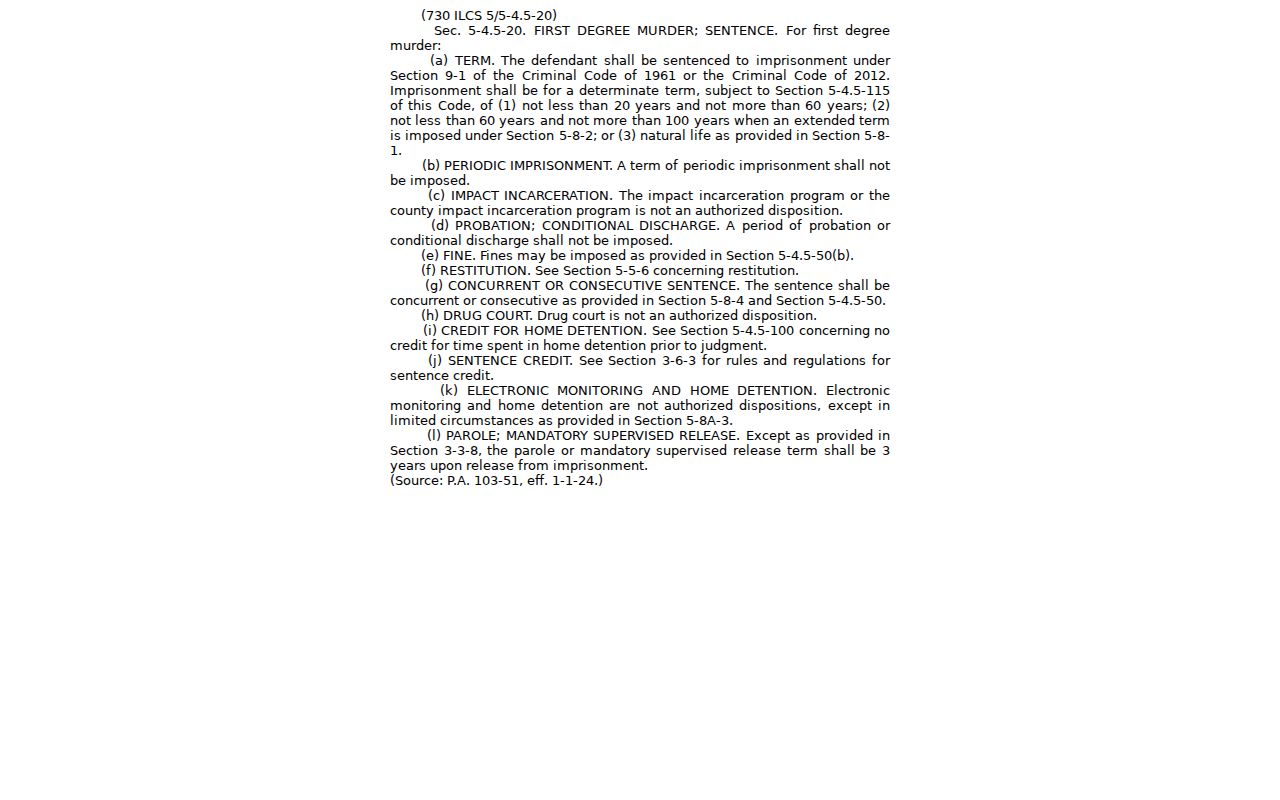
Class 1 ordinarily carries four to fifteen years, subject to the controlling offense and exceptions.
The Class 2 provision supplies the next distinct range.
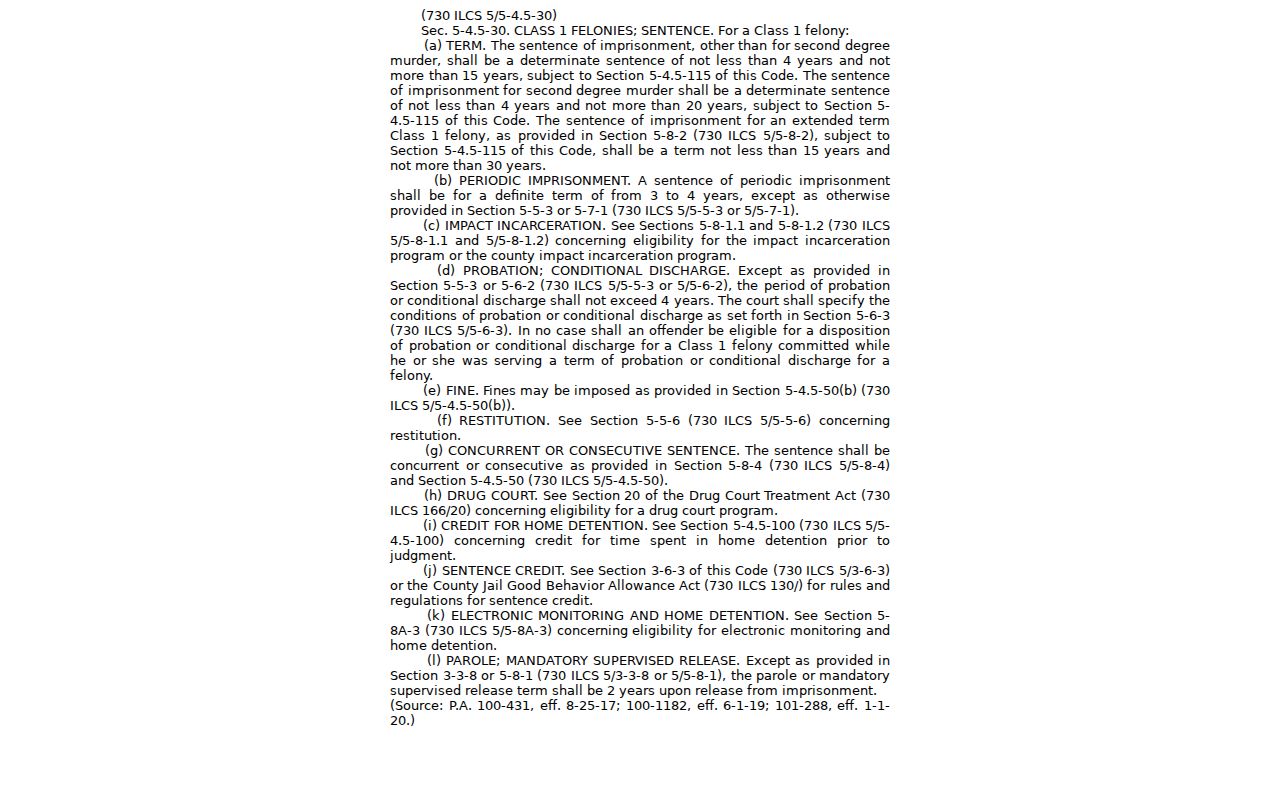
Class 2 ordinarily carries three to seven years. Read the actual count and disposition before applying any range.
Ripley Lower Felony Classes
Illinois Class 3 and Class 4 labels can appear in Brown County dockets. They remain felony classifications even though their ordinary prison ranges are shorter. A docket class alone does not reveal whether probation, another sentence, an enhancement, or dismissal applies.
The Class 3 sentencing section is the source for the ordinary two-to-five-year range.
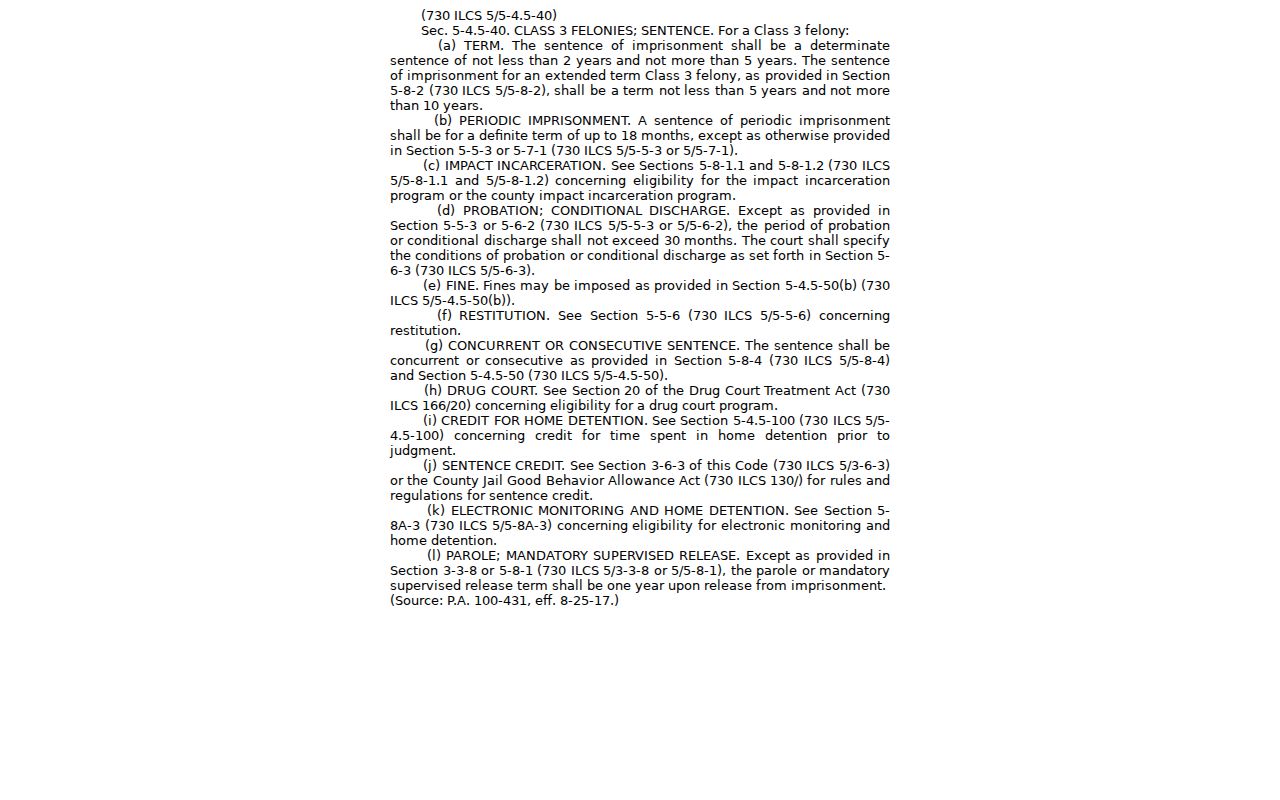
The court judgment controls the outcome, not the label seen in an early report.
The Class 4 sentencing section states the ordinary one-to-three-year range.
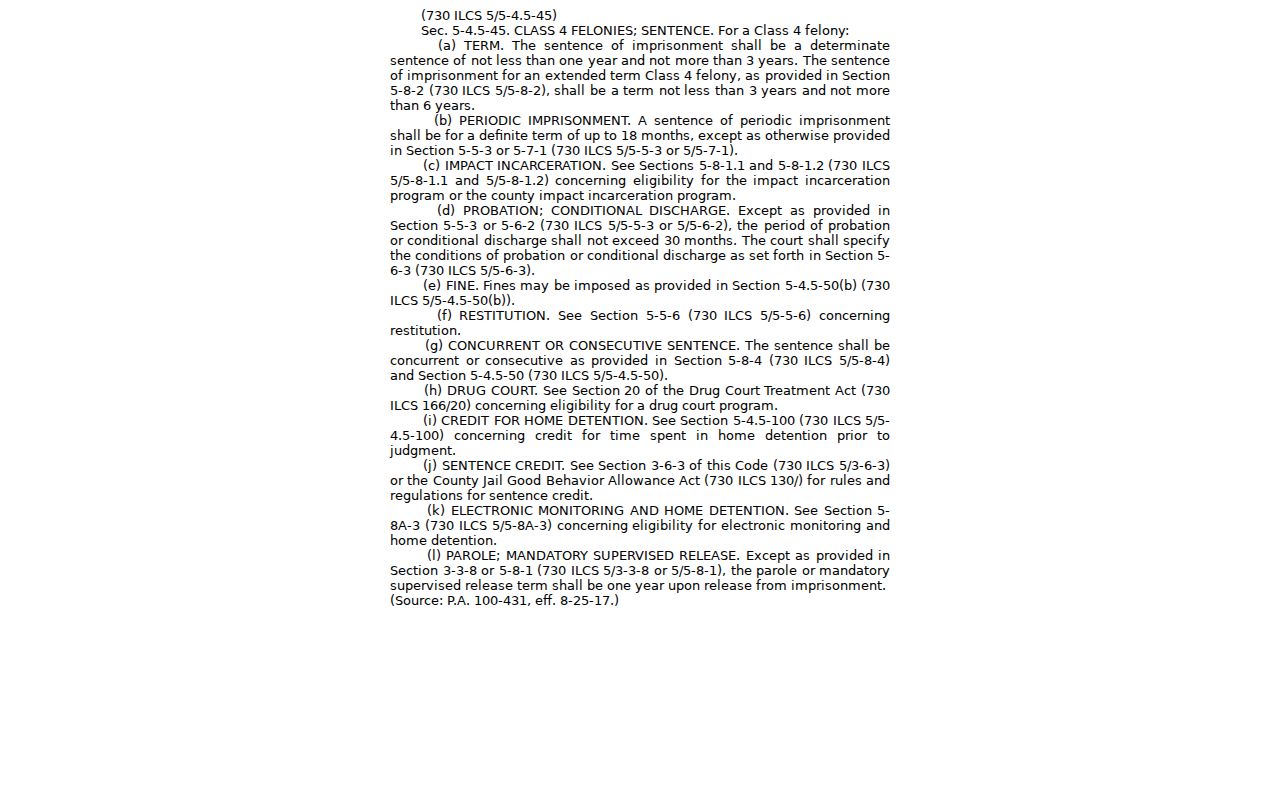
Always verify the current statute and offense-specific provisions. The final order shows what the court actually imposed.
Ripley Record Access Rules
Illinois FOIA applies to sheriff and other public-body records. Court records follow judicial access rules and should be ordered from the Circuit Clerk. A noncommercial FOIA request generally has a five-business-day response framework, with a possible statutory extension. Copy fees follow State limits when applicable; no Ripley fee schedule was located.
Key Statutes:
Illinois FOIA, 5 ILCS 140 governs requests, response time, fees, exemptions, and denial notices.
Uniform Conviction Information Act, 20 ILCS 2635 defines the public ISP conviction product and accuracy rights.
20 ILCS 2630/5.2 governs expungement and sealing of qualifying Illinois records.
The general FOIA schedule gives the first 50 black-and-white letter or legal pages without charge, then permits up to 15 cents per page. Color and electronic media may use actual reproduction cost. A denial should cite the exemption and review rights. Ask for nonexempt portions rather than treating a redaction as loss of the whole file.