
Arrest Records in Brown County
The Brown County Sheriff, Illinois State Police, especially Troop 6 on state highways, and municipal officers working through local arrangements may create arrest records here. The agency making the arrest writes the incident or arrest report. A custodial facility creates intake data, photographs, fingerprints, property entries, holds, and release or transfer details. ISP may then associate submitted fingerprints with an Illinois arrest cycle.
That sequence can produce several valid records for one event. The officer's narrative explains asserted probable cause. Intake staff record identity, property, safety screening, photograph, fingerprints, charge or warrant validation, custody class, and bond or first-appearance status. A later prosecutor decision controls which counts, if any, reach court. The Circuit Clerk then records pleadings, orders, hearings, disposition, and sentence. Since those documents answer different questions, describe a Brown County arrest by source and date. A booking field is not a court finding, and a court result does not rewrite the agency narrative.
The prosecutor decides whether and what to charge. That later decision can narrow, amend, or reject an initial allegation. Brown County's public sources do not state how far back all local booking files extend, and they do not identify a separate online jail database. A sound search therefore follows the named agency rather than assuming one local portal contains the whole history.
Brown County Weekly Arrest Reports
The county's News and Sheriff's Report archive is the closest official public activity log. Dated posts often list traffic crashes, citations, road locations, alleged conduct, and some referrals to the State's Attorney. They are selective editorial summaries, not a full arrest blotter, jail roster, warrant list, rap sheet, or finding of guilt.
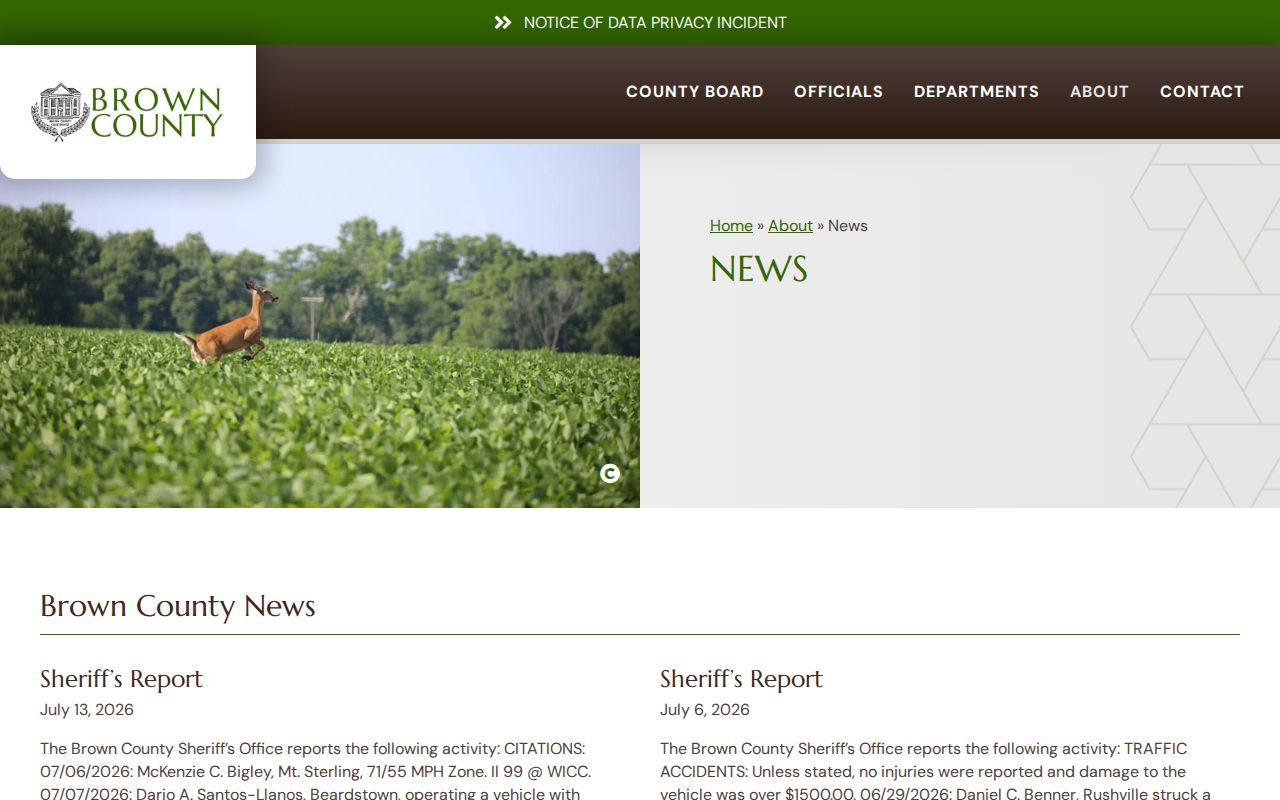
The image shows the official archive route. Use a dated entry to identify the likely agency and event date, then request the underlying record or match it to a filed court case.
Road and location details make the reports useful in a rural county. Posts often refer to US 24, Illinois routes 99 and 107, traffic citations, crashes, deer collisions, and referrals for further review. Those details help separate similar events, but they are not county crime totals. Some entries combine sheriff and ISP activity, so attribute each item to the agency named. Older reports may include personal names that are not repeated here. Use the archive to narrow the search, not to infer a complete Brown County arrest history.
Brown County Arrest Lookups
Brown County has no verified public online inmate roster. The most useful chain combines the sheriff archive, the Room 1 phone or counter, the arresting agency, the Circuit Clerk, and a focused written request. State tools answer narrower questions: VINELink can provide custody status or notice when participating data exists; IDOC covers state custody after commitment; CHIRP discloses state-maintained conviction information rather than every arrest.
- Check the dated Brown County Sheriff's Reports for a selected public summary of the event.
- Call 217-773-2061 extension 1 with the full name and approximate date; ask about current custody, transfer, bond, and a booking number.
- Request the incident or arrest report from the agency named in the report or court record, including ISP when it made the arrest.
- Search Brown County criminal and traffic court categories because a filed case may appear after the arrest.
- Send the sheriff a focused Illinois FOIA request when the public sources do not provide the releasable fields needed.
- Use VINELink for participating custody notices, IDOC for state commitment, and CHIRP only for conviction information.
Brown Arrest Help in Room 1
The Brown County Sheriff's Office operates from Room 1 at 200 Court Street, Mt. Sterling, IL 62353. Call 217-773-2061 extension 1 or email sheriff@browncoil.org. No separately branded records division, dedicated booking portal, public roster, jail capacity statement, or separate jail address was found in the official sources.
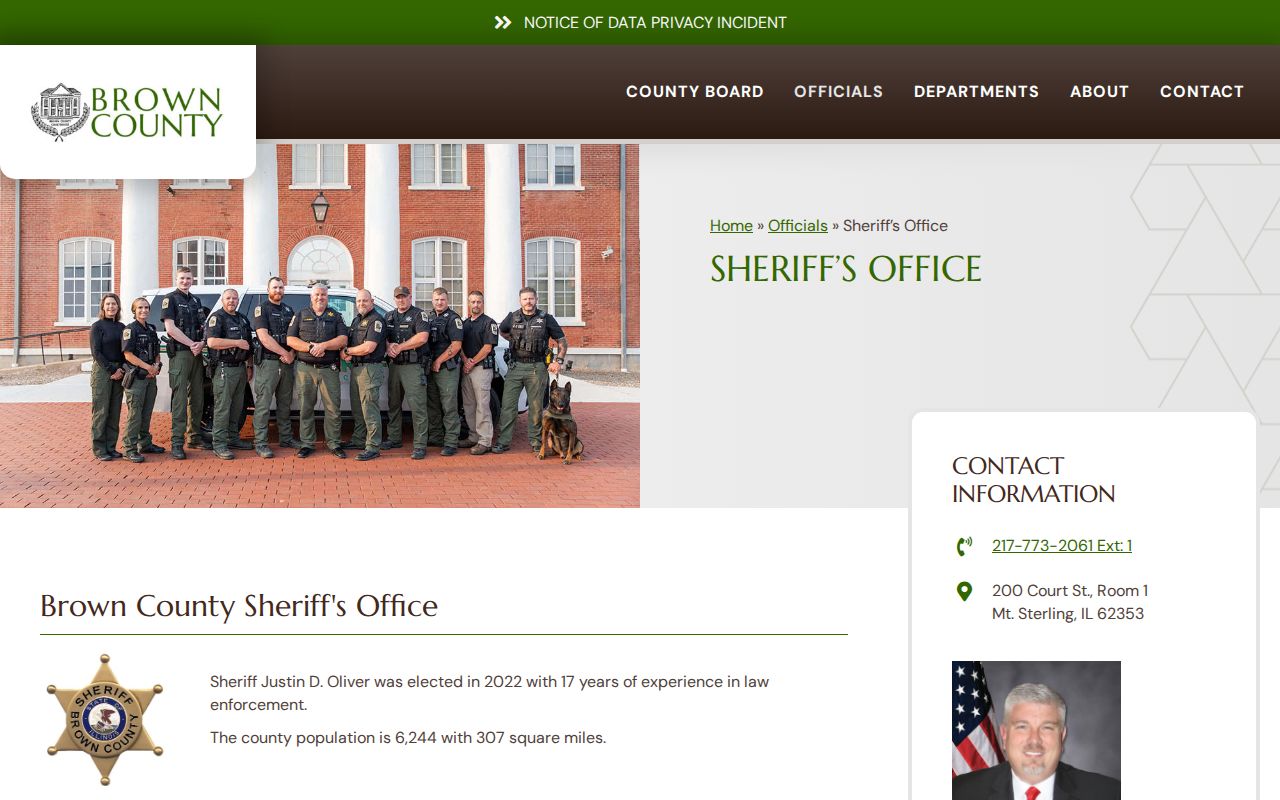
The official page supports direct routing. Ask whether the person was transferred to another county facility before seeking visitation, mail, deposit, or phone details. The current housing site controls those rules.
No official source confirms whether Brown County operates its own jail at the courthouse or contracts all or some beds elsewhere. It also does not publish a 24-hour custody line, capacity, visitation plan, commissary vendor, phone vendor, mail format, or deposit service. Those are call-ahead facts. Ask Room 1 for the current housing facility, booking identifier, bond information, and release or transfer status. Then contact that facility before sending funds or mail or planning a visit. This avoids importing details from Brown County, Wisconsin or Indiana, a documented search-engine mix-up that can produce plausible but wrong jail information.
Brown County Sheriff's Office
200 Court Street, Room 1
Mt. Sterling, IL 62353
217-773-2061 ext. 1
sheriff@browncoil.org
Arrest Records: What They Contain
Ask for fields that identify the event and its later route. Useful identifiers include the agency report number, arrest number, booking number, case or warrant reference, fingerprints transaction control number, event date, and location. Release remains subject to Illinois law, redactions, and the record's status.
| Booking number | Local intake identifier, if a custodial booking occurred. |
|---|---|
| Booking date and time | Dates the intake and helps separate similar events. |
| Arresting agency | Identifies who keeps the underlying incident or arrest report. |
| Alleged charges | Records the arrest-stage claim, which may change before filing. |
| Bond or hold | States custody terms recorded at that stage. |
| Booking photograph status | Release was not confirmed and may be restricted or redacted. |
| Release or transfer | Shows whether custody ended locally or moved elsewhere. |
Brown County Arrest Requests by FOIA
Use the Brown County FOIA contacts when direct public sources do not supply the record. State the event date, time, location, report or booking number, desired format, and whether certification is needed. Ask for the releasable incident and arrest report, including the face sheet and closure notation. If part is withheld, request the nonexempt remainder and the specific legal basis for each redaction.
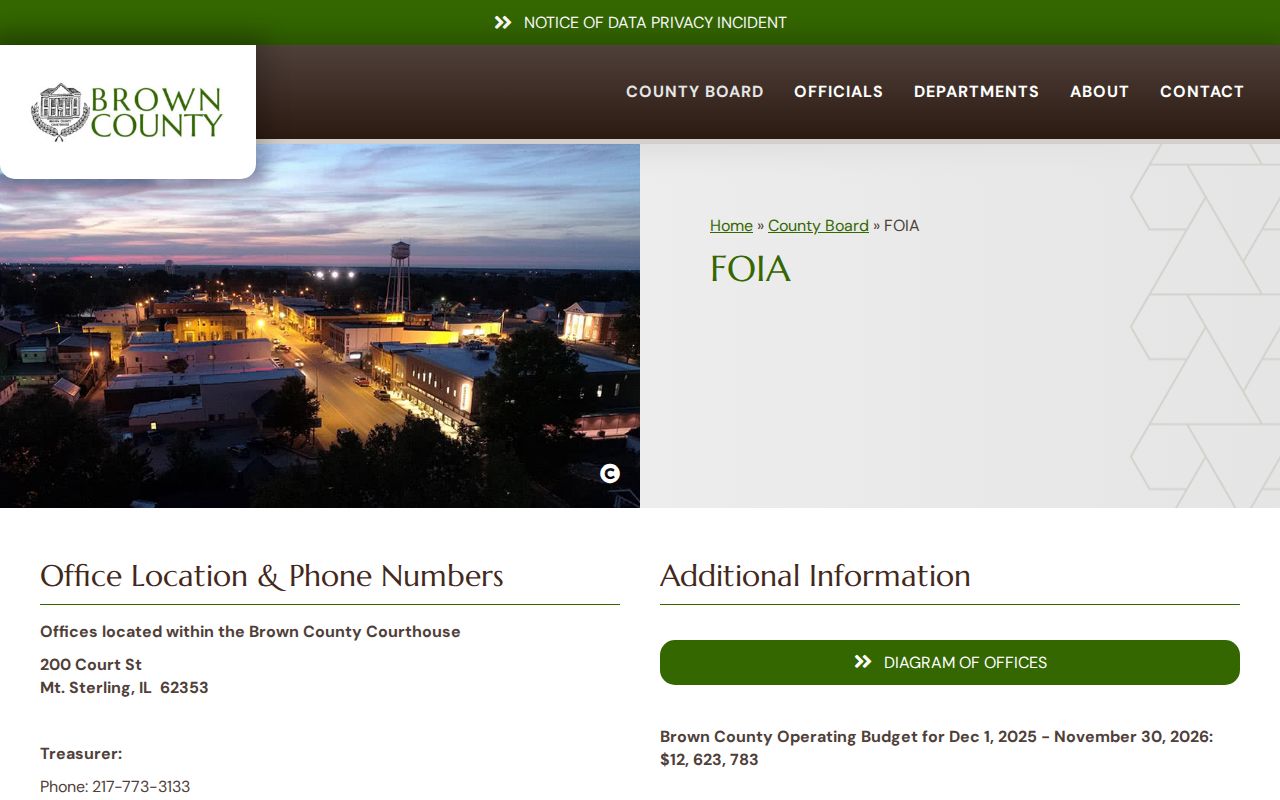
The source image confirms the county's formal fallback. No dedicated county web form, published base fee, local fax, drop box, or guaranteed turnaround was located. Illinois FOIA generally gives a public body five business days for a noncommercial request, subject to a statutory extension. The first 50 black-and-white letter or legal pages are generally free, with up to 15 cents per page afterward.
A narrow request is easier to locate. Include requester contact information, occurrence and arrest dates, approximate time, location, report or citation number, parties' names only as needed, and the desired format. Ask for a fee estimate before costs exceed a chosen amount. Illinois FOIA permits redaction for private information, juvenile matters, confidential sources, active-enforcement concerns, security, and other exemptions. A denial should identify the exemption and review rights. Court documents remain with the Circuit Clerk under court-access rules, so do not ask the county FOIA office to turn a judicial record into a sheriff record.
Recent Brown County Bookings
The weekly reports are the county's only verified public online activity series, and they cannot answer who is currently booked. Call Room 1 for current local custody and ask for the booking number, bond status, release, or transfer. If participating information is present, VINELink may support custody status and notifications.
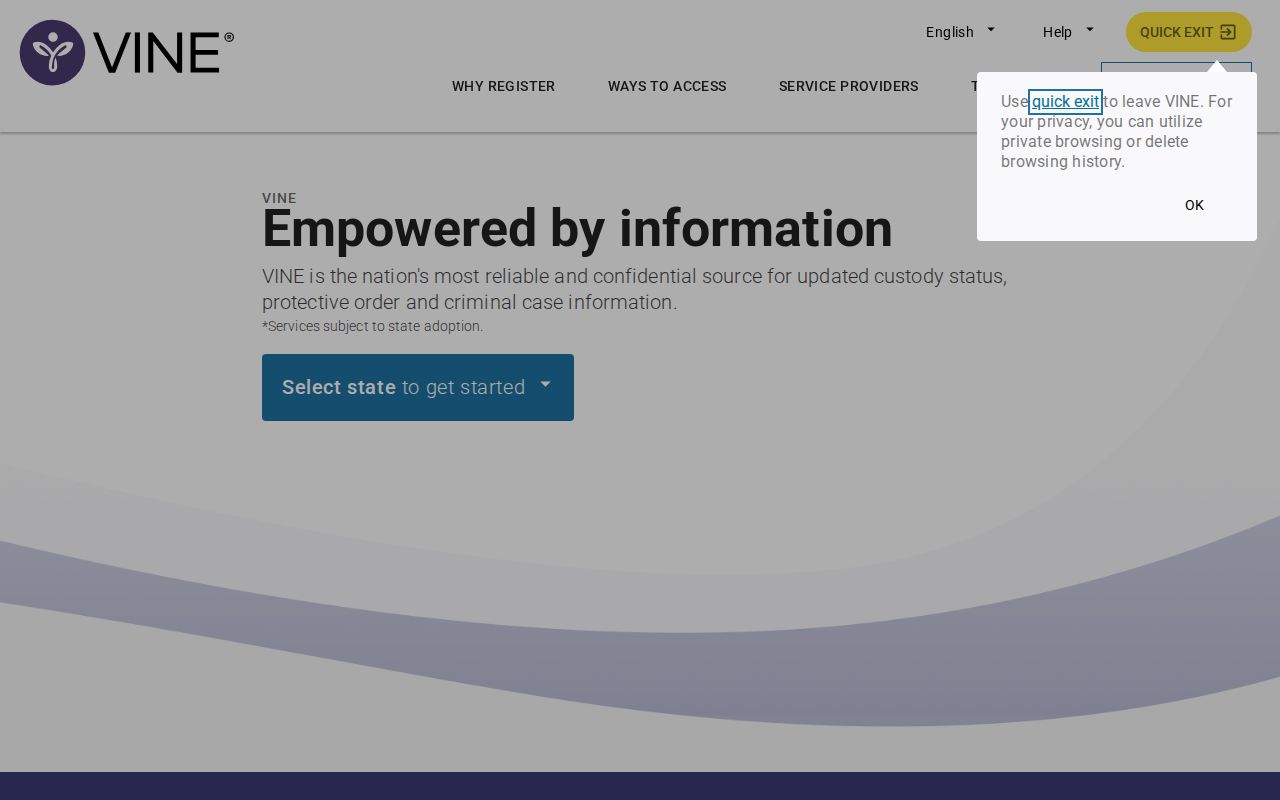
The image represents the notification layer, not a complete Brown County arrest-history file. A missing result may reflect participation, timing, transfer, release, spelling, or system scope. IDOC should be checked only after a state-prison commitment, since county detention and state custody are separate systems.
Brown Sheriff or ISP Arrest
Always request the report from the agency that made the arrest. Brown County Sheriff's Office records cover its incidents and custodial work. ISP Troop 6 activity on state highways belongs with ISP. The ISP records and FOIA route identifies categories held by the state police.
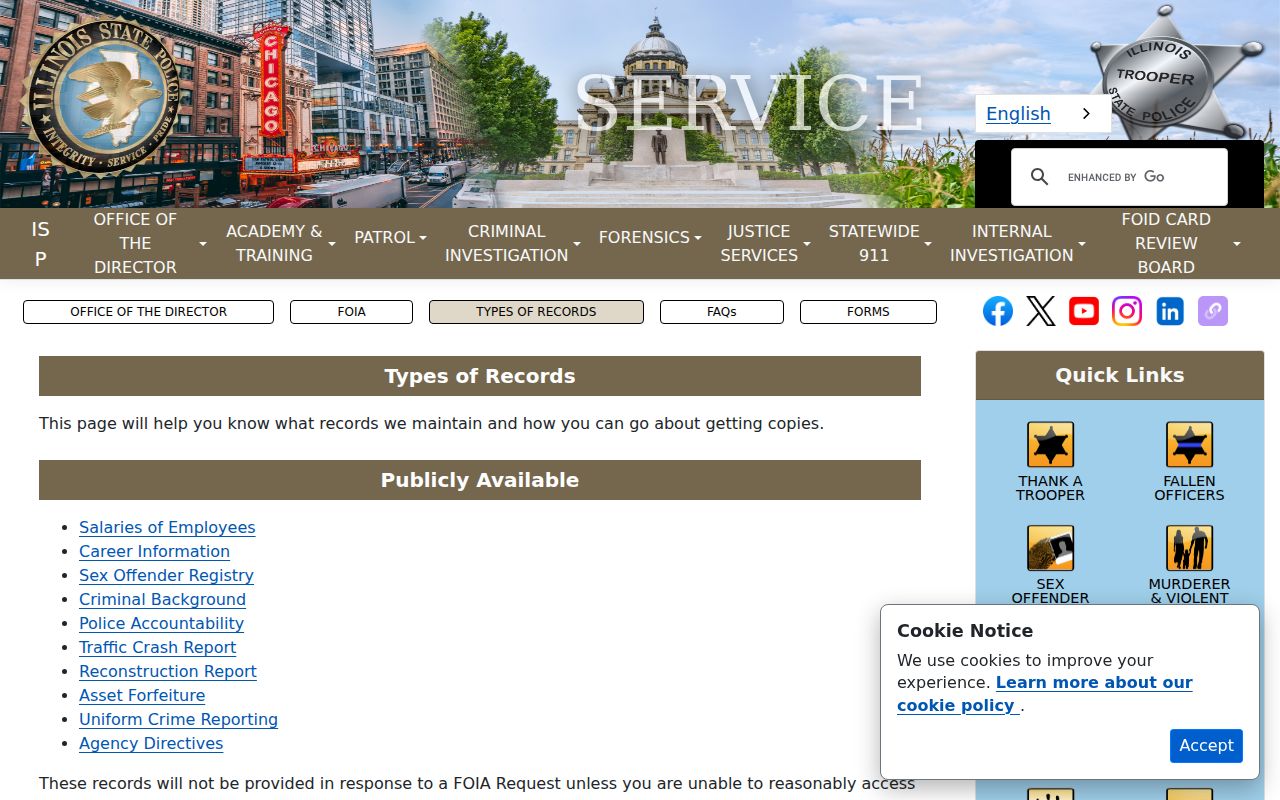
This split prevents a common dead end: Brown County cannot produce an ISP narrative merely because the event occurred inside county lines. Likewise, an ISP conviction response is not the local police report.
Crash records have their own official channel. The ISP crash-report service is shown below.
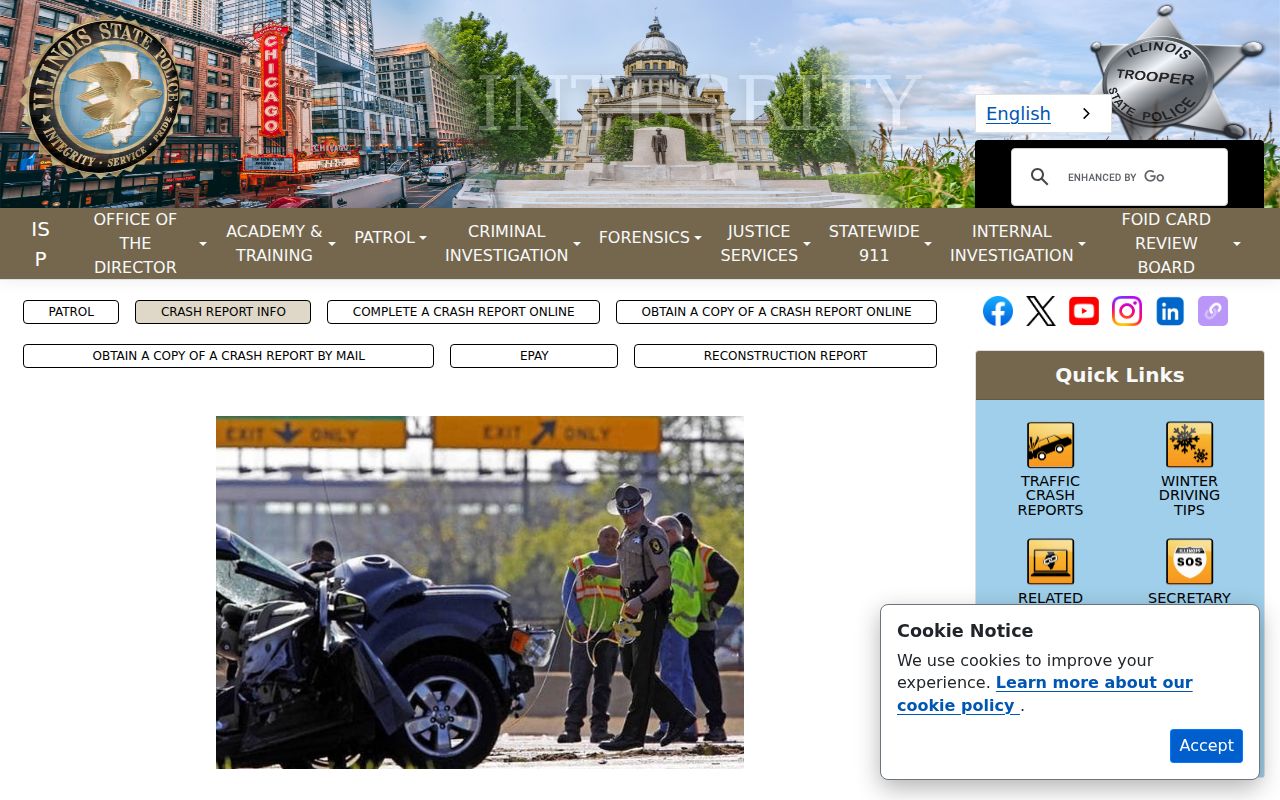
A crash report may help document a traffic event, but it does not establish a criminal case outcome. Check the clerk if charges were filed.
Brown Arrests Reach ISP
After intake, fingerprints and a transaction control number can link the booking to an ISP Bureau of Identification cycle and State Identification number. The State's Attorney separately decides charges. If a court case follows, the Circuit Clerk records the docket and final disposition, which is then reported back to ISP so the arrest cycle can be paired with its outcome.
Record flow: Arresting Agency › Booking and Fingerprints › ISP Arrest Cycle › Prosecutor Filing › Circuit Court Disposition › ISP Update
Timing, name variation, print quality, older paper records, or an unreported disposition can leave gaps. For one's own Illinois record, ISP Access and Review is the proper accuracy and challenge process. CHIRP instead supplies conviction information under the Uniform Conviction Information Act.
CHIRP requires account access and provides Illinois conviction information, not every pending, dismissed, local, sealed, expunged, or federal matter. The ISP fee inventory lists a $10 electronic name inquiry and $16 manual inquiry. Fingerprint UCIA fees differ. Access and Review of one's own Illinois record is a separate free ISP process, though a licensed live-scan vendor may charge for capture. No verified Brown County fingerprint storefront was located, so confirm the vendor, appointment, and price before travel. These distinctions keep a recent booking search from being mistaken for an official review of the state's linked record.
Keep the local and state identifiers together during a self-review. A booking number helps the sheriff find intake data, while a Brown County case number points the clerk to the filed action. An ISP response or request number belongs with any later challenge. When the disposition is missing or wrong, obtain the certified court order first and follow the ISP correction instructions. This sequence avoids treating a weekly report as a state record or asking the Circuit Clerk to alter an agency report. It also makes the gap clear: the arrest source documents the event, the court documents adjudication, and ISP maintains the linked state cycle.
Arrest Records vs Conviction Records
An arrest record shows that an agency documented an arrest or booking. A conviction requires a court judgment of guilt. Brown County readers should compare the booking record with the filed case and final order because allegations can be rejected, amended, dismissed, resolved through supervision, or end in acquittal.
| Arrest Record | Conviction Record |
|---|---|
| Created by the arresting or booking agency | Created by the court after adjudication |
| Shows an arrest or intake occurred | Shows a judgment of guilt |
| Lives with the sheriff, police, or state arresting agency | Lives with the Circuit Clerk and may be reported to ISP |
| Can lead to release, no charge, dismissal, or a case | Can lead to sentence, appeal, sealing, or other later order |
Note: An arrest is not proof of guilt; verify the filed counts and final Brown County court disposition before drawing a conclusion.